Touchgrind BMX 3: Rivals
Illusion LabsSports
3.5231.00 Reviews
- Version
- 2.2.2
- Installs
- 1.00M
- Age Rating
- Everyone
Screenshots
Our Review of Touchgrind BMX 3: Rivals
 Analysis by Appyee
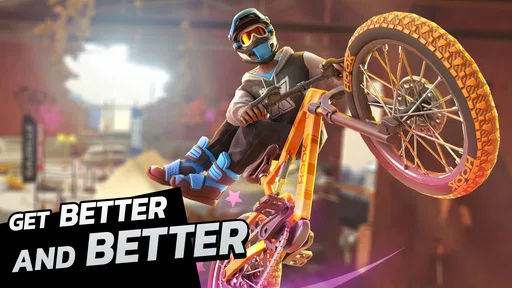
I noticed Touchgrind BMX 3: Rivals because it promises a very specific kind of sports game: not a full cycling simulator, but a compact test of balance, timing, and stunt control. After spending time with it, my first impression was that Illusion Labs understands the appeal of making a phone screen feel like a small piece of equipment. The game asks me to guide a BMX bike through extreme tricks with touch controls, and that simple idea becomes surprisingly demanding once a course starts moving quickly.
This is a free sports game for Android and iOS, aimed at everyone, with a low barrier to starting but a much higher ceiling for anyone who wants to improve. It has passed the one-million-install mark, which makes sense: the premise is easy to understand in a few seconds, while the controls give committed players a reason to keep returning. The current version is 2.2.2, and the game was released on September 28, 2024. I would not describe it as a relaxed bike ride. It is closer to a series of short, focused challenges where a tiny mistake can turn a promising run into a crash.
A first ride that feels more tactile than expected
The most important thing to understand is that the bike is not controlled like a character moving through a conventional platform game. The touch interface makes the rider’s movement feel direct, and that changes how I read every jump. I am not simply choosing a route and watching an animation finish. I am trying to keep control through takeoff, rotation, landing, and recovery. That makes the opening minutes approachable, but it also exposes the game’s central weakness: if my fingers are imprecise or I rush the gesture, the result can feel harsher than the visual simplicity suggests.
The first impression is therefore split in a useful way. The game looks accessible because the action is clean and immediately visible, yet it expects attention. A short session can be satisfying because I can attempt a trick, fail, and understand roughly why it failed. The best moments come when a movement that felt awkward at first suddenly becomes natural. I like that sense of physical learning more than a progression system that simply hands out stronger equipment or automatic rewards.
That said, this is not the ideal choice for somebody who wants a casual sports game with generous correction. The controls reward deliberate input, and the pressure increases when several actions need to happen in sequence. If I am playing while distracted, I do not get the same experience as when I give the screen my full attention. The game works well during a short break, but it is not always mentally light.
The free entry point helps. I can try the core experience without paying first, then decide whether the style of challenge suits me. In-app purchases range from $0.99 to $99.99 per item, so I would advise treating optional spending carefully and deciding in advance how much the game is worth to me. The free download is enough to judge the handling, which is the part that matters most before spending anything.
Why the opening works for some players and not others
I think the strongest early use case is a player who enjoys repeating a compact challenge to improve one detail at a time. Someone who likes arcade racing, trick games, or score chasing will probably understand the appeal quickly. A player expecting a story-led BMX adventure may feel that the experience is too focused on execution. There is no need for a large narrative setup here; the pleasure comes from mastering movement inside the course.
A realistic everyday scenario would be a ten-minute session during a commute or while waiting for an appointment. I can make a few attempts, identify whether I am mistiming a jump or over-rotating a trick, and stop without losing the thread of a long campaign. For a longer evening session, the same structure can become repetitive if I am not personally motivated by improving a run. This is one of those games whose value depends heavily on whether failure feels informative to me.
A visual world built around motion rather than decoration
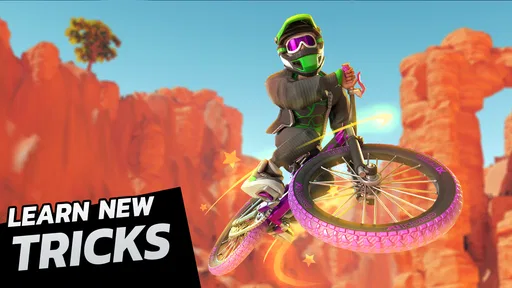
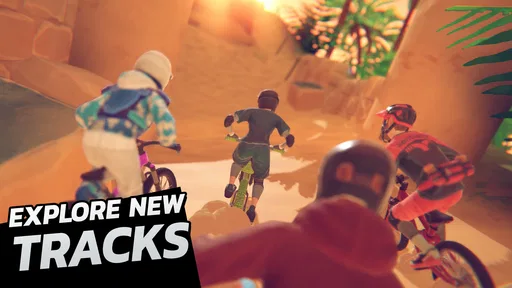
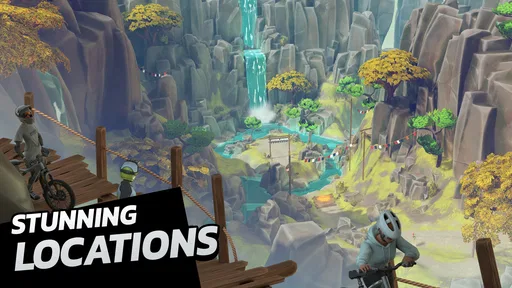
The art direction supports the game’s physical focus. The setting is presented as a space for movement, obstacles, jumps, and tricks rather than as a place I need to explore for its own sake. That restraint is important. A busier visual style could make it harder to read the bike’s position, especially when I am trying to judge a landing while also preparing the next input. The clean presentation gives the action room to breathe.
I read the environments as a visual language of momentum. Ramps point the eye forward, gaps create anticipation, and the arrangement of surfaces tells me where the next decision matters. The setting does not need to explain itself with long text. It communicates through the shape of the route. That makes the game feel closer to a designed stunt course than to a conventional open world, and I think that is the right choice for this kind of touch-driven challenge.
One non-obvious benefit of this approach is that visual simplicity can improve practice. When I repeat a course, I start remembering landmarks: the place where I need to prepare a rotation, the landing that punishes a late correction, or the section where I should stop trying to add another trick. Those visual cues become part of my technique. I am not only memorizing button combinations; I am learning the course as a sequence of physical questions.
The trade-off is variety of mood. If I want a richly populated world, detailed characters, or a sense of touring through different locations, this game may feel narrow. Its environments serve the riding system first. I appreciate that discipline, but I would not mistake it for a broad sports lifestyle game. The setting is there to frame the stunt, not to compete with it.
How the presentation affects readability
Good stunt games need to show me enough information without turning the screen into a technical dashboard. Here, the visual presentation works best when I am watching the bike’s relationship with the course. I can focus on the angle, the distance to the landing, and the space available for the next maneuver. That makes the art direction functional as well as attractive.
It also changes how failure feels. When the course is visually understandable, a crash usually feels like a mistake I can investigate rather than a random punishment. I can ask whether I started the trick too late, held the movement too long, or approached the landing badly. That clarity is valuable because it turns repetition into practice. The game is much less satisfying if I only want to pass each section once and move on.
Players with smaller screens or less comfortable touch control may need more patience. Precision is easier when my fingers are not covering the most important part of the action. I found that holding the device steadily and avoiding hurried gestures made a noticeable difference. This is a practical tip that sounds obvious, but it matters more here than in a typical tap-based sports title.
Sound, rhythm, and the feeling of a successful run
The sound design contributes to the game’s mood by reinforcing movement and impact rather than trying to turn every moment into a dramatic event. I pay attention to the rhythm of a run: approach, launch, rotation, landing, and acceleration into the next section. When the audio responds cleanly to those changes, it gives the course a pulse. That pulse helps me stay engaged even when the visual setting remains intentionally focused.
I especially like how sound can make a landing feel like a punctuation mark. A clean connection with the course gives the run a sense of continuation, while a crash breaks the rhythm immediately. That distinction matters because the game is built around chaining decisions together. The sound is not merely background decoration; it helps me feel whether the run is flowing or becoming unstable.
The pacing benefits from this audio relationship. The game does not need long explanations to create tension. A short approach can feel important because I know that one poorly timed action will interrupt the sequence. This is where the extreme-sports mood comes through most clearly: the excitement is concentrated in a few seconds of controlled risk.
Still, the same focused pacing can become tiring. If I am repeatedly attempting one difficult section, the emotional effect of a crash loses some force. I may begin to concentrate more on correction than atmosphere. That is not necessarily a flaw, but it means the sound and visual mood work best when I alternate focused attempts with short breaks. I would not play endlessly in one sitting unless I was unusually determined to solve a particular challenge.
Using rhythm as a practical tool
My most useful adjustment was to stop treating every trick as an isolated stunt. I began listening for the rhythm of the entire route. Instead of thinking only about “perform the next move,” I considered where the bike needed to be stable before the following jump. This helped me avoid adding unnecessary risk. A flashy action is not always the best action if it leaves the landing poorly aligned.
That approach also answers a common question about difficulty: should I focus on speed or style first? I would choose control first. A slower, cleaner run teaches me more than a fast attempt that collapses because I am forcing tricks into every opening. Once the route feels familiar, I can experiment with more ambitious movement. The game’s atmosphere encourages spectacle, but the mechanics reward restraint more often than a new player might expect.
Where the mechanics fit, and where they resist
The control design is the heart of the experience. Touchgrind BMX 3: Rivals asks me to use the screen as an active surface, and that makes each trick feel more personal than selecting an icon from a menu. The advantage is immediacy. When I succeed, I feel that my timing and hand movement contributed directly. The disadvantage is that small inconsistencies in touch input can become frustrating, particularly when I am already under pressure from the course.
I would compare it with ordinary mobile sports games in a clear way. Many alternatives simplify the action into taps, swipes, or timing bars, which makes them easier to play while distracted. This game chooses a more involved form of control. It is less convenient, but it offers more room for personal improvement. If I want quick rewards with minimal practice, another arcade sports title may be the better fit. If I want to develop muscle memory and feel responsible for the outcome, this one has the stronger identity.
The mechanics also create an interesting trade-off between experimentation and consistency. Trying a new trick can make a run more exciting, but every extra decision increases the chance of losing control. I learned to separate practice attempts from scoring attempts. During practice, I tried different movements even when I expected to fail. During a serious run, I used the actions I could land reliably and saved experimentation for safer sections.
That workflow is one of the game’s deeper strengths. It gives me a reason to think about risk rather than simply repeating the same input. The best route is not always the one with the most tricks. Sometimes the smarter choice is to preserve balance, accept a less spectacular moment, and arrive at the next obstacle with control. That kind of decision makes the game feel more like riding than like pressing a sequence of commands.
Who should install it, and who should skip it
I would recommend this sports game to players who enjoy tactile controls, short challenge loops, and gradual mastery. It is particularly suitable for someone who likes watching a failed attempt and immediately wanting to adjust one variable. The age rating of Everyone makes it broadly accessible, but accessibility in the age-rating sense should not be confused with effortless play. Younger or inexperienced players may still need time to understand why a gesture succeeds in one situation and fails in another.
I would skip it if I wanted a relaxed game that I could play one-handed while paying attention to something else. I would also look elsewhere if my priority were team competition, realistic career management, or a large collection of licensed sporting activities. This is a focused BMX trick experience, and its narrowness is both its appeal and its limitation.
The average rating is 3.5 from around ten thousand ratings, with more than two hundred written reviews. I see that middle-ground reception as a useful warning rather than a problem by itself. The game has a clear idea and executes that idea with personality, but touch precision and repetition will not suit everyone. I would judge it by trying the free version, not by assuming that its popularity guarantees a perfect fit.
Practical habits that make the game less frustrating
First, I recommend learning the shape of a section before chasing the most impressive result. Watch how much space is available after a landing and notice whether the next obstacle demands immediate preparation. This prevents the common mistake of celebrating a successful trick only to lose the run because the bike is badly positioned afterward.
Second, I would keep a mental distinction between a safe landing and a stylish landing. They are not always the same. If the goal is progress, stability usually matters more than adding one extra flourish. If the goal is personal challenge, then the safer route becomes a baseline from which to build.
Third, I found it helpful to pause between attempts rather than instantly repeating a failed movement. Even a brief reset can stop frustration from turning into faster, less accurate gestures. The game’s pacing makes immediate retries tempting, but improvement often comes from identifying the exact moment control was lost.
Finally, I would avoid spending money until I know whether I enjoy the core handling. With optional purchases priced from $0.99 to $99.99 per item, the sensible test is free play first. No purchase can replace the patience needed to learn the touch controls, so spending should only follow genuine enjoyment rather than frustration after a difficult run.
An atmosphere that serves the ride
What stays with me is the coherence between the art direction, sound, setting, and mechanics. The visual world keeps attention on the route, the audio gives landings and crashes a rhythm, and the touch controls make every decision feel close to the bike. None of these elements tries to become a separate attraction. They all support the same mood: focused, kinetic, and slightly tense.
That mood is strongest when I am in the middle of a clean run. I can feel the course opening in front of me, hear the movement settle after a landing, and recognize that the next action must be prepared rather than improvised. It is a small experience, but it has a distinct identity. Illusion Labs has not made a generic sports game with BMX imagery placed on top; the riding itself shapes the presentation.
My main reservation is that the same concentration can expose the game’s limits. Players who need broad variety, forgiving controls, or a constant stream of new distractions may run out of enthusiasm. The rating of 3.5 reflects the kind of divided response I would expect from a specialized game: compelling when its control style clicks, less inviting when touch precision feels like work.
For me, the final verdict is positive with conditions. I would recommend it to a friend who enjoys mastering movement and does not mind repeating a course to improve a landing. I would describe it as a free, focused BMX sports game rather than a complete cycling world. Try it for the handling, play with sound on when possible, learn the course before chasing spectacle, and treat purchases cautiously. If that combination sounds appealing, Touchgrind BMX 3: Rivals offers a memorable little space where art and sound make every successful trick feel earned.
Verdict
Strengths of Touchgrind BMX 3: Rivals
- Responsive controls make tricks feel precise and satisfying.
- Large stunt environments encourage exploration and experimentation.
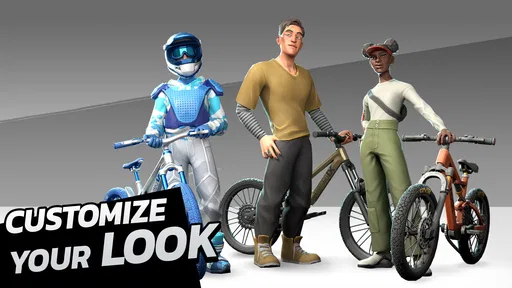
- Bike customization adds variety beyond simply completing courses.
- Short challenges are convenient for quick gaming sessions.
- Stylish visuals and effects make successful tricks look impressive.
Limitations of Touchgrind BMX 3: Rivals
- Progression can feel slow without spending money or replaying events.
- Some advanced tricks require considerable practice to perform consistently.
- Ads and prompts may interrupt the flow between runs.
- Limited offline functionality can reduce its appeal during travel.
- Later content may feel repetitive once familiar courses are mastered.
Other Releases by Illusion Labs
View All


Similar Picks in This Category
View All
8 Ball Pool
Miniclip.com4.8

Pooking - Billiards City
AIM TOP GAME TECHNOLOGY LIMITED - pool4.6

Carrom Pool: Disc Game
Miniclip.com4.4

EA SPORTS FC Soccer Mobile 26
ELECTRONIC ARTS4.6

World Soccer League
mobirix4.3

Soccer Cup 2026: Football Game
INLOGIC SPORTS - football tennis golf soccer4.3
Frequently Asked Questions
What is Touchgrind BMX 3: Rivals, and how does the gameplay work?
Touchgrind BMX 3: Rivals is a physics-based BMX game focused on performing tricks, completing challenges, and competing for better scores. You control the bike using touch gestures rather than traditional buttons, placing your fingers on the handlebars and seat to steer, jump, spin, and land. The controls take some practice, but successful combinations feel responsive and rewarding.
Is Touchgrind BMX 3: Rivals free to download and play?
The game can generally be downloaded for free, although it may include optional in-app purchases. Players can often unlock bikes, customization items, upgrades, or other content through progression, while purchases may speed up access or provide additional choices. Before downloading, check the store listing for the current pricing model, available purchases, and any regional differences.
Does Touchgrind BMX 3: Rivals require an internet connection?
Some features may work without a constant connection, particularly basic riding and previously available content, but online functionality can require internet access. Competitive events, leaderboards, updates, advertisements, account services, and certain downloadable content may not be available offline. If you plan to play while traveling, test the game without Wi-Fi or mobile data first.
Is Touchgrind BMX 3: Rivals suitable for beginners and younger players?
The game is approachable, but its gesture-based controls can feel difficult during the first sessions. Beginners need time to learn balance, timing, landing techniques, and trick combinations. It is generally suitable for players who enjoy arcade sports games, although parents should review the current age rating, advertisements, online features, and in-app purchases before allowing younger children to play.
What devices are needed to play Touchgrind BMX 3: Rivals smoothly?
Performance depends on the device, operating system, available storage, and the current version of the game. Newer Android and iOS phones or tablets should provide smoother graphics and more reliable touch response, while older devices may experience longer loading times, reduced visual quality, or occasional slowdowns. Check the official store page for the latest compatibility requirements before installing.
Play our best games!


